

Dear Catalysis Researchers,
Welcome to our monthly newsletter Magic Powder dedicated to the catalysis research and development.
Why Magic Powder:
We have selected “Magic Powder” for our newsletter as a metaphor for a catalyst which is likely inspired by the idea that catalysts, much like a Merlin of reactions, have the power to initiate , facilitate and accelerate transformations of chemicals into valuable products for humanity. All over the world, catalysis researchers are searching for unexplored and surprising results of this “Magic Powder” in various chemical, biochemical, photochemical, electrochemical processes.
In this monthly issue, we present one article about an important Turkish research facility in Amman/Jordan , TXPES (Page 2). In addition, we present short summaries of high impact research articles conducted by Turkish Catalysis Community (Page 3).
Thank you for being part of our catalysis community. We look forward to bringing you more exciting updates in the next edition of our newsletter. We are always open to contributions of academic and industrial partners in our upcoming issues.
Merlin is a legendary figure known for his association with Arthurian legends and medieval folklore. He is often depicted as a wise and powerful wizard, advisor to King Arthur, and a central figure in many stories about the Knights of the Round Table. Merlin is sometimes portrayed as a mysterious and enigmatic figure, possessing knowledge of both natural and supernatural realms.
Editorial Board: Prof. Dr. Ayşe Nilgün AKIN
Prof. Dr. N. Alper TAPAN
Dr. Merve Doğan Özcan
Contact info:
Email:katalizdernegi@gmail.com
Linkedin: https://www.linkedin.com/in/kataliz-derneği-272879a
About TXPES: First Turkish Synchrotron Beamline
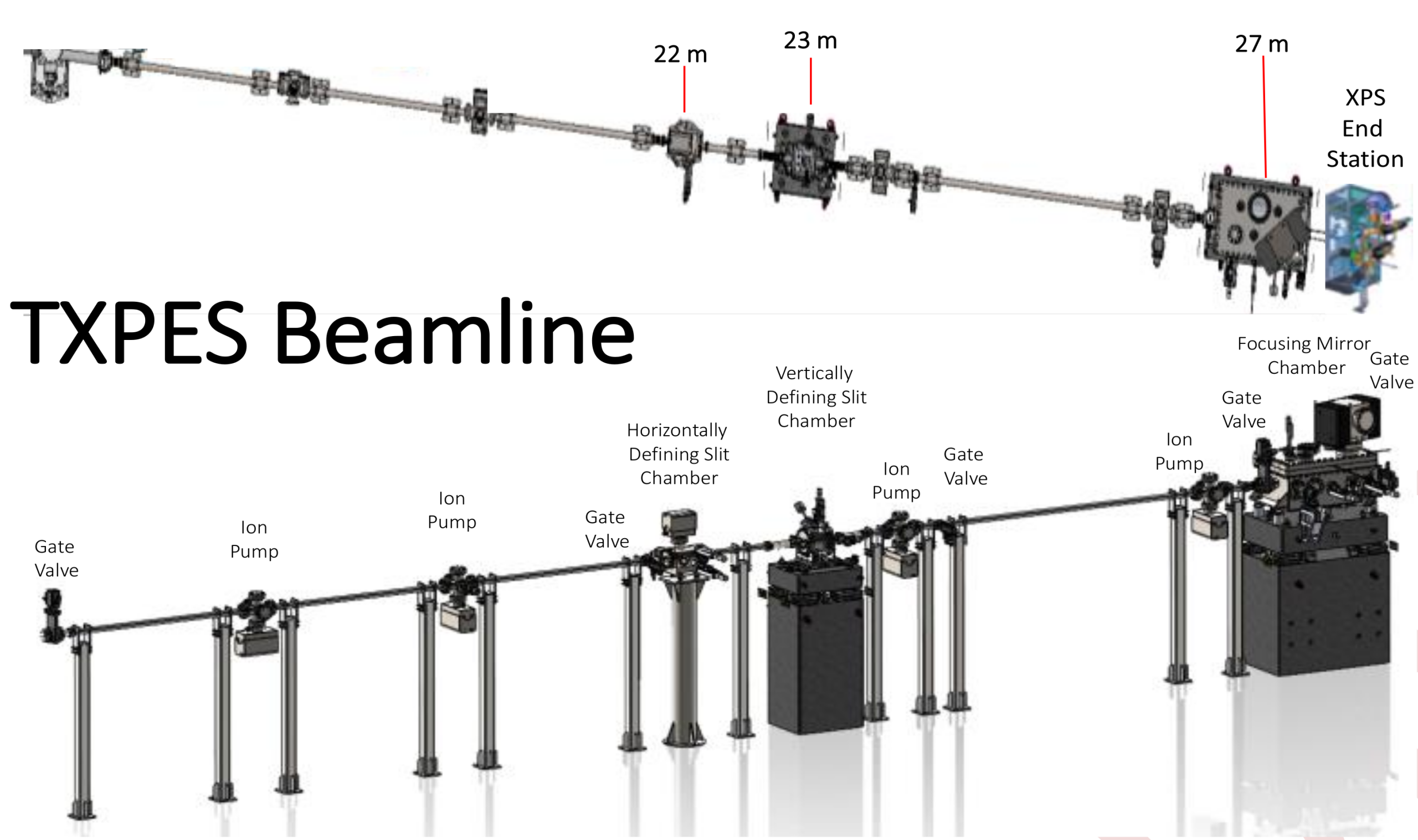
Turkish soft X-ray PhotoElectron Spectroscopy (TXPES) beamline at Synchrotron-light for Experimental Science and Applications in the Middle East (SESAME) in Amman, Jordan is the first synchrotron beamline built by Turkey. TXPES project is financially supported by the Republic of Türkiye Presidential Strategy and Budget Office. Project is led by the Turkish Energy, Nuclear and Mineral Research Agency (TENMAK), where the project partners are Bilkent University, Koç University, and Turkish Accelerator Radiation Laboratory (TARLA). TXPES project includes the design and manufacturing of an X-ray Optics Branchline which will be entirely carried out in Ankara, Turkey at TARLA, as well as the design and construction of a multi-functional surface science analysis and spectroscopy end station.
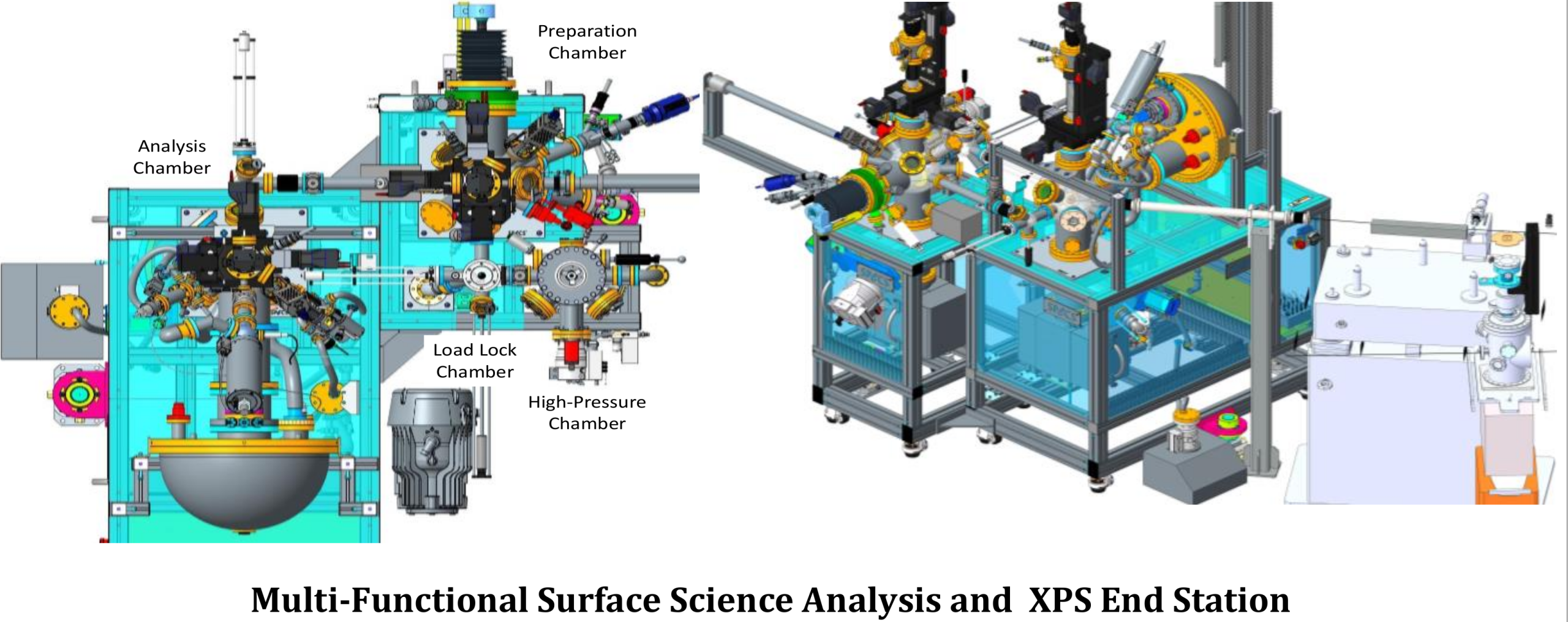
Multi-Functional Surface Science Analysis and XPS End Station
TXPES beamline will be utilizing soft X-rays with energies ranging within 70-1800 eV. It will allow users to perform X-ray photoelectron spectroscopy (XPS), ultra violet photoelectron spectroscopy (UPS), low-energy ion scattering spectroscopy (LEISS), residual gas analysis via a quadruple mass spectroscopy (QMS), low-energy electron diffraction (LEED), surface cleaning via ion sputtering, thin film deposition and growth with e-beam/thermal evaporators, and sample temperature control within 77 K - 1200 K. As a unique capability, TXPES end station will also host a «High-pressure/High-temperature Cell» enabling analysis of samples upon their interaction with selected gases at elevated temperatures and pressures without exposure to ambient conditions prior to analysis.
TXPES beamline aims to understand the chemistry and the electronic structure of nanomaterials with a high surface sensitivity. Thus, it is designed to serve for a wide user base comprised of researchers in the field of chemistry, physics, material sciences, and chemical/electrical/mechanical engineering. Capabilities of the TXPES beamline is expected to be invaluable in catalysis, surface Science, thin films, energy materials, photovoltaics, semiconductors, nanomaterials, optoelectronics, sensors, and relevant fields associated to interfacial phenomena.
Recent Selected Papers in our Catalysis Community
In recent months, there have been exciting research studies in catalysis research in Turkey. Here are the short summaries:
Oxidation catalysis
Mete, E., Yilmaz, B., & Uner, D. (2023). PdH α-phase is associated with residual oxygen as revealed by in situ 1H NMR measurements and DFT-NMR estimations. Applied Surface Science, 641, 158421.
Conducting both experimental and DFT studies, this research focuses on elucidating the chemical nature of α and β-PdH phases in Pd/TiO2 by analyzing their 1H NMR chemical shifts, revealing shielded 1H NMR resonances around −30 ppm from TMS for α-PdH states. In situ NMR measurements indicates the appearance of this peak only during partial reduction of PdO .DFT estimations supports similar NMR chemical shifts attributed to hydrogen adsorbed at the metal-surface interface, providing valuable insights into the role of trace oxygen in the formation of the α phase of PdH.
Reformer catalysts
Özcan, O., & Akın, A. N. (2023). Methanol steam reforming kinetics using a commercial CuO/ZnO/Al2O3 catalyst: Simulation of a reformer integrated with HT-PEMFC system. International Journal of Hydrogen Energy.
This study presents a comprehensive kinetic analysis of methanol steam reforming over a Cu-based commercial catalyst, revealing a strong correlation with non-linear regression results. Reaction orders of 0.29 for methanol and 0.09 for water, a frequency factor of 53.48 (molCH3OH s-1 .gcatalyst-1 kPa-0.38), and an activation energy of 65.59 kJ mol-1 were determined. A subsequent simulation study suggests the integrated system of a reformer and an HT-PEMFC holds the potential for a 15 W power output.
Ozkan, D. M., Uzun, A., Caglayan, B. S., & Aksoylu, A. E. (2023). A DFT Study on the Role of Oxygen Vacancy on m-ZrO2 (1¯ 11) in Adsorption and Dissociation of CO2. Surface Science, 122336.
This study investigates the crucial role of oxygen vacancies in the activation and dissociation of CO2 molecules on m-ZrO2. Through periodic DFT calculations, m-ZrO2 which is a widely studied support for Catalytic Dry Reforming of Methane (CDRM) catalysts reveals that the presence of oxygen vacancies, regardless of their type, significantly enhances the dissociative CO2 adsorption ability of m-ZrO2, affirming its potential as a support for practical CDRM catalysts with improved coke resistance and performance stability.
Exhaust emission catalysts
Bayram, B., Önal, I., & Külah, G. (2023). Thermal stability and SO2 resistance of Pd/Rh-perovskite based three-way catalyst wash-coated on cordierite monoliths. Chemical Engineering Communications, 210(2), 205-222.
This work demonstrates that after hydrothermal aging at 1000 °C for 3 hours, the dispersed Pd/Rh-based catalyst exhibited a significant loss in performance, particularly during C3H8 and NO conversions, in contrast to the Pd/Rh perovskite-based catalyst which maintained its activity, while exposure to 20 ppm SO2 resulted in CO uptake capacity reductions of 61% and 48% for the two catalysts, respectively.
Machine Learning applications on catalysis
Günay, M. E., & Tapan, N. A. (2023). Analysis of CO selectivity during electroreduction of CO2 in deep eutectic solvents by machine learning. Journal of Applied Electrochemistry, 1-16.
This work employs supervised and unsupervised machine learning techniques, including SHAP analysis, principal component analysis (PCA), and decision tree classification, to identify key molecular and physicochemical factors, such as hydrogen bond donor and hydrogen bond acceptor molecular properties, leading to high CO selectivity during the electroreduction of CO2 in deep eutectic solvents. This study offers valuable insights for designing efficient CO2 electrolyzers with reduced experimental effort and time.
Electrocatalysis
Bal, İ. B., Durmuş, G. N. B., & Devrim, Y. (2023). Fabrication and performance evaluation of graphene-supported PtRu electrocatalyst for high-temperature electrochemical hydrogen purification. International Journal of Hydrogen Energy.
This study investigates high-temperature electrochemical hydrogen purification (HT-ECHP) capabilities of platinum (Pt) and platinum-ruthenium (PtRu) nanoparticles decorated on graphene nanoplatelet (GNP) support material. Catalysts were synthesized using microwave irradiation and coupled to a phosphoric acid doped polybenzimidazole (PBI) membrane. The results demonstrate that the PtRu/GNP catalyst exhibits strong synergistic interactions between Pt and Ru particles and achieves the highest H2 purification performance, affirming its potential as a promising catalyst for HT-ECHP applications.
Hydrogen production catalysts
Kaya, C., Özdemir, J. H., Elçiçek, H., Özdemir, O. K., Kökkülünk, G., & Ünlügençoğlu, K. (2024). Enhancing the efficiency of sodium borohydride hydrolysis with a novel CoB-Triton catalyst. International Journal of Hydrogen Energy, 51, 489-503.
In the pursuit of efficient hydrogen production for maritime transportation, this study employs a surfactant-stabilized CoB catalyst, specifically CoB-Triton 150, demonstrating a 40.2% faster hydrogen generation rate compared to CoB alone. Triton X-100 surfactant was found to be a promising candidate for enhancing the hydrolysis performance of solid state sodium borohydride (NaBH4), paving the way for further research in improving fuel cell performance and advancing the application of hydrogen as a clean energy source in the maritime industry.
Biofuel production
Gungormus, E., Seker, E., & Altinkaya, S. A. (2023). Antifouling Polydopamine-Modified Poly (ether sulfone) Membrane Immobilized With Alumina-Calcium Oxide Catalyst For Continuous Biodiesel Production. Fuel, 349, 128685.
Presenting a novel approach for sustainable biodiesel production, a catalytically active polydopamine-modified poly (ether sulfone) (PES) membrane, immobilized with an alumina-calcium oxide catalyst, demonstrated superior performance by overcoming fouling challenges through backwashing with butanol, emphasizing its potential to enhance the cost-effectiveness and environmental friendliness of biodiesel production compared to traditional methods.
Guvenc, C., Alan, E., Degirmencioglu, P., Ozcan, M. C., Karaman, B. P., & Oktar, N. (2023). Catalytic upgrading of bio-oil model mixtures in the presence of microporous HZSM-5 and γ-Al2O3 based Ni, Ta and Zr catalysts. Fuel, 350, 128870.
This study explores the catalytic upgrading of a model bio-oil compound with ethanol for biofuel production, with a focus on microporous HZSM-5 and Al2O3-based catalysts; the synthesized 10Zr@MA catalyst, characterized by various techniques, including XRD, XANES, SEM/EDS, and DRIFTS exhibits the highest catalytic activity, achieving the best oil phase selectivity and isoparaffin selectivity with minimal coke formation compared to other catalysts.
Çakman, G., Ceylan, S., & Balci, S. (2023). Catalytic Deoxygenation of Oleic Acid over Synthesized Ni@ CMK-3 Catalyst using Analytical Py-GC/MS and TG-FTIR. Journal of Porous Materials, 30(3), 899-909.
In this investigation, Ni@CMK-3 catalyst was synthesized via the impregnation method. The effectiveness of catalyst in the pyrolysis of oleic acid (OA) for biofuel production was confirmed by XRD, N2 adsorption/desorption isotherms, Raman spectra, SEM images and ICP-MS analysis, highlighting its potential for conversion of waste oils into renewable fuels with enhanced OA conversion and the generation of hydrocarbons and acids as predominant products.
Fuel transformation catalysts
Yousefzadeh, H., Bozbag, S. E., Sushkevich, V., van Bokhoven, J. A., & Erkey, C. (2023). Stepwise conversion of methane to methanol over Cu-mordenite prepared by supercritical and aqueous ion exchange routes and quantification of active Cu species by H2-TPR. Catalysis Communications, 174, 106574.
This study shows that supercritical ion exchange (SCIE)-prepared copper-exchanged mordenite (Cu-MORS) exhibits increased methanol yield during stepwise conversion of methane. Deconvoluted H2-TPR profile distinguishes active copper sites from inactive ones based on reduction temperature, revealing a lower autoreduction susceptibility compared to aqueous ion exchange (AIE)-prepared Cu-MORA. Therefore this study highlights the significance of site-selective ion exchange for controlled synthesis of active copper species in zeolites.
Environmental remediation catalysts
Aykut, E., Sert, M., & Sert, E. (2023). Catalytic activity of MOF derived CuFe@C catalysts for catalytic reduction of 4-nitrophenol. Journal of Water Process Engineering, 54, 103970.
This study covers utilization of a fabrication method involving the direct carbonization of metal organic frameworks. In addition this study presents efficient preparation of active and reusable Cu@C and CuFe@C bimetallic catalysts derived from HKUST-1 and Fe-doped HKUST-1. Cu0.8Fe0.2@C demonstrates superior catalytic activity in the reduction of 4-nitrophenol compared to Cu@C, completing the reaction in 60 seconds and offering recyclability and high stability, thereby showcasing its potential for converting harmful pollutants into useful substances.
Photocatalysis
Suleman, S., Guan, X., Zhang, Y., Waseem, A., Metin, O., Meng, Z., & Jiang, H. L. (2023). Regulating the generation of reactive oxygen species for photocatalytic oxidation by metalloporphyrinic covalent organic frameworks. Chemical Engineering Journal, 476, 146623.
This study showcases an effective strategy for controlled production of reactive oxygen species (ROS), specifically singlet oxygen (1O2) and superoxide (O2•−), by utilizing a covalent organic framework (COF) array with metalloporphyrin cores containing d-block transition metals, leading to distinct performance in photocatalytic aerobic oxidations, with the regulated ROS generation attributed to the evolution of electronic structures in the COF array which were supported by electronic property studies and density-functional theory (DFT) calculations.
Recently Past Catalysis Events
As a tradition of Turkish Catalysis Society, a very successful and fruitful biannual conference was held in Çanakkale 18 Mart University, Turkey. Very exciting scientific talks were given by the top research institutes in Turkey on different branches of catalysis. You can download our open access book of abstract for further detailed information of this excellent event.
https://drive.google.com/file/d/1X_znGhSY3h7dbQiHr-Cc29XOz1EH0oyr/view
Upcoming Catalysis Events
The 35th National Chemistry Congress with special session on Catalysis (Date: 09-12/09/2024)
In order to enhance communication and collaboration among scientists working in the field of catalysis in our country, a decision was made during the General Assembly Meeting of the Turkish Catalysis Society held on September 7, 2023. It was decided that a special session organized by the Catalysis Association would take place during the National Chemical Engineering Congresses (UKMK) and National Chemistry Congresses (UKK), with the aim of increasing interaction and collaboration. The 35th National Chemistry Congress (https://kimya2024.com/), coordinated by the Turkish Chemical Society, will be held in collaboration with the Chemistry Departments of İnönü University Faculty of Arts and Sciences and Dicle University Faculty of Science in Diyarbakir from September 9 to 12, 2024. Following discussions with the Congress Organization Committee and the Chemistry Society, it has been decided that the Congress will include a topic on "Catalysis."
Valuable scientists conducting research in homogeneous catalysis, heterogeneous catalysis, electrocatalysis, photocatalysis, and biocatalysis to participate in the 35th National Chemistry Congress will be invited to share their academic work and evaluate scientific developments. We invite oral and poster presentations of catalysis researchers under the theme of "Catalysis."
Web site: https://kimya2024.com/
7th Anatolian School of Catalysis (Date: 01-05/09/2024)
7th Anatolian School of Catalysis (ASC-7) to be held at Izmir Institute of Technology on 1-5 September 2024. This event upholds the tradition initiated by the Turkish Catalysis Society in Ankara (ASC-1, 2006) followed by school series held in 2008 (ASC-2, İzmir), 2010 (ASC-3, Malatya) 2017 (ASC-4, Izmir), 2019 (ASC-5, Izmir), and 2022 (ASC-6, Izmir). The title of the ASC-7 is “Tale of Catalysis from Past to Future: Lectures from Masters of Catalysis”. The ASC-7 focuses on catalysis fundamentals and applications along with recent advances regarding catalyst synthesis, characterization, testing, and industrial catalytic processes. The school provides the opportunity to acquire a more profound understanding of various aspects of the catalysis field and enables researchers to connect with globally recognized experts from academia and industry. This opportunity allows them to gain insights from these experts' experiences and expand their professional network, fostering potential collaborations in the future. The ASC-7 covers the following topics: fundamentals of homogeneous, heterogeneous, bio-, electro-, photocatalysis, catalytic reaction engineering, advanced catalyst synthesis methods, in-situ and synchrotron characterization, sustainable and green catalytic processes, computational and industrial catalysis research. The school is designed for early career researchers, graduate students, and professionals working in industry, who require deepening their insights into catalytic processes. The ASC-7 consists of invited lectures, industrial talks, and poster contributions. The posters will be selected by the scientific committee, based on the innovative aspect and scientific level. We hope that everyone will benefit from the ASC-7. Our aspiration is that ASC-7 will serve as an adaptable platform for both structured and informal exchanges with colleagues from both academia and industry, igniting fresh perspectives on research and collaborative endeavors.
Organization committee is also working on transforming ASC7 into an international school as EFCATS School of Catalysis.
We would like to express our sincere thanks to you in advance for your kind interest in our school, your attendance, and your valuable contributions. We are looking forward to seeing you at the 7th Anatolian School of Catalysis.
Web site: https://meetinghand.com/e/7th-anatolian-school-of-catalysis-asc-7/
Don't miss out! Register now for these events and be part of the catalysis community.
Today’s idiom:
"Like a catalyst in a reaction, sometimes a small spark of inspiration can set off a chain of transformative events in life."